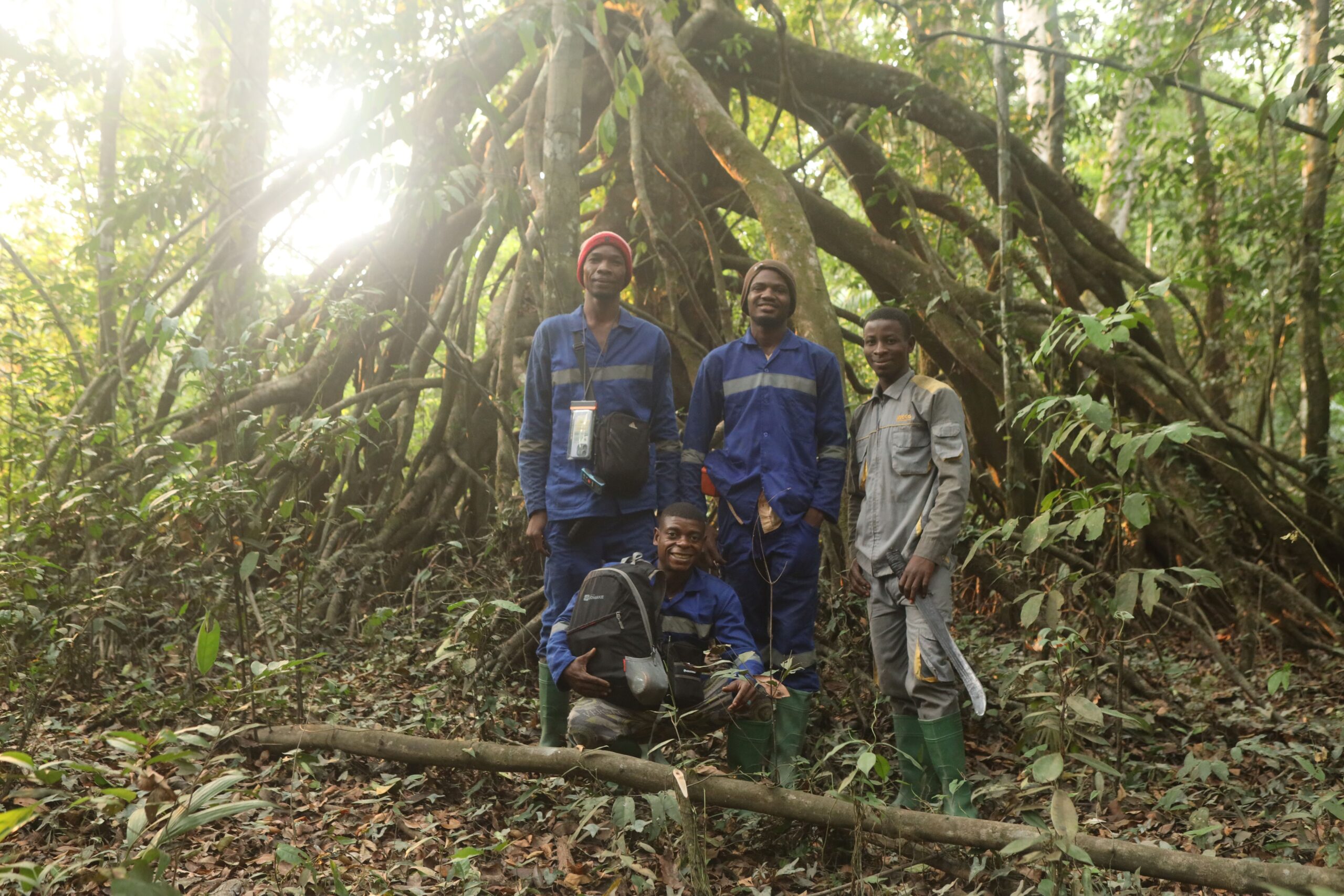
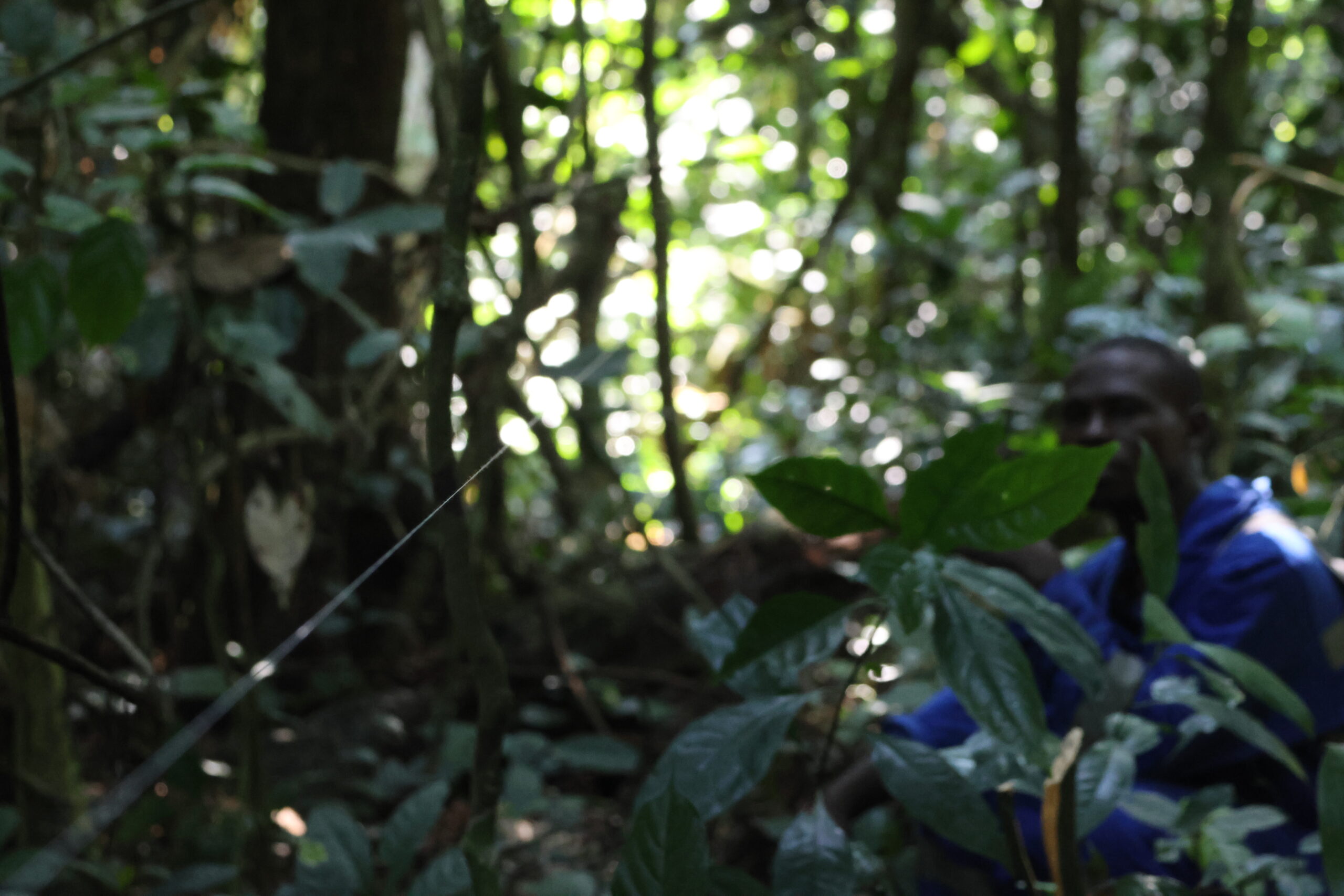
In the jungles of the Central African Republic, a thin white string unfolds along the path of five wildlife researchers as they head deeper into the Dzanga-Sangha rainforest. For close to eight hours, the group inches their way forward, only moving as fast as a machete can hack away at an unforgiving terrain of thorns and vines.
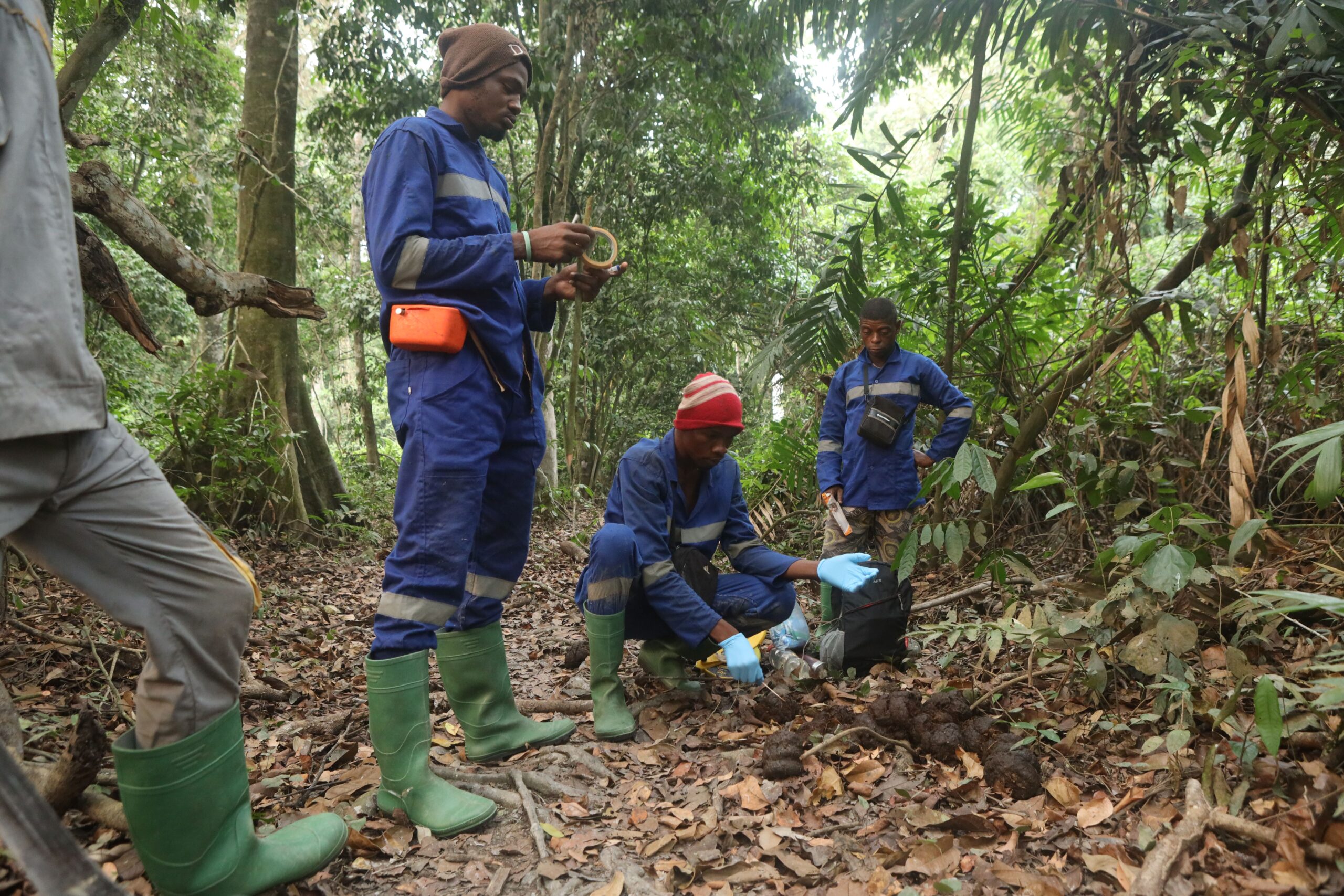
As the team progresses along the transect, they collect samples of animal dung and document footprints, and occasionally install camouflaged cameras at key points of their journey.
The string trails behind as the group moves forward, marking the progress of their trek.This mile-long string represents one of 186 line transects being set up across the Dzanga-Sangha Protected Areas (DPSA) for the 2025 Wildlife Inventory overseen by Antoine Edé, DPSA’s head of monitoring, research, Primate Habituation, One Health and Forest Department.
Put simply, this is one of the ways that conservationists in the world’s second largest tropical rainforest count its wildlife populations.
The rainforests of the Congo Basin serve as a critical ecosystem for biodiversity and wildlife conservation. In Dzanga-Sangha, the work of surveying the populations of critically endangered wildlife is no simple endeavor.
“In order to achieve our conservation objectives, it is essential that we measure our impact in order to understand what is truly effective. The most direct indicator of success is the trend of the animal populations; however, the real challenge is how to count them accurately, especially in our dense tropical rainforest.”
The World Wildlife Fund CAR and DPSA conduct the wildlife inventory every five years, providing a comprehensive survey of the number of wildlife populations within its over one million acres of dense wilderness.
The inventory is necessary for understanding the biodiversity of the region and for planning the distribution of eco-guard patrols, the law enforcement unit tasked with protecting wildlife from poachers and illegal hunting, according to Edé.
Analysis of previous wildlife inventories in Dzanga-Sangha have shown that the presence of eco-guards reduce human pressures and are critical for maintaining stable populations of these endangered mammal species. The value of the inventory is also to assess population trends of these endangered species over time. The last two inventories – in 2015 and 2020 – confirms that elephant and gorilla populations have remained stable, a sign that conservation efforts in Dzanga-Sangha are working.
Since 2010, DPSA has been primarily relying on the line transect and camera trap methods for the inventory, with a particular focus on monitoring large mammals such as western lowland gorillas, chimpanzees, forest elephants and bongos.
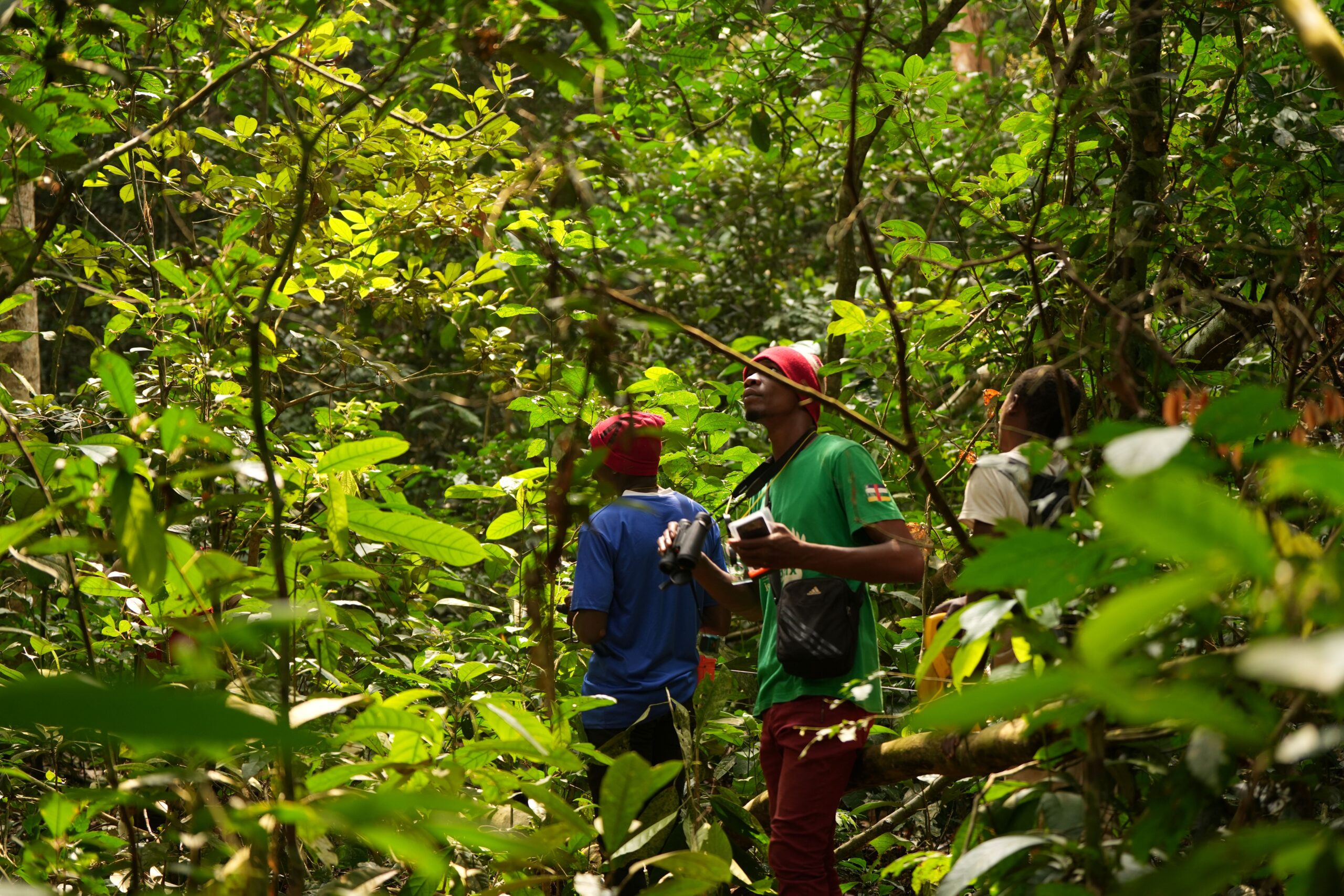
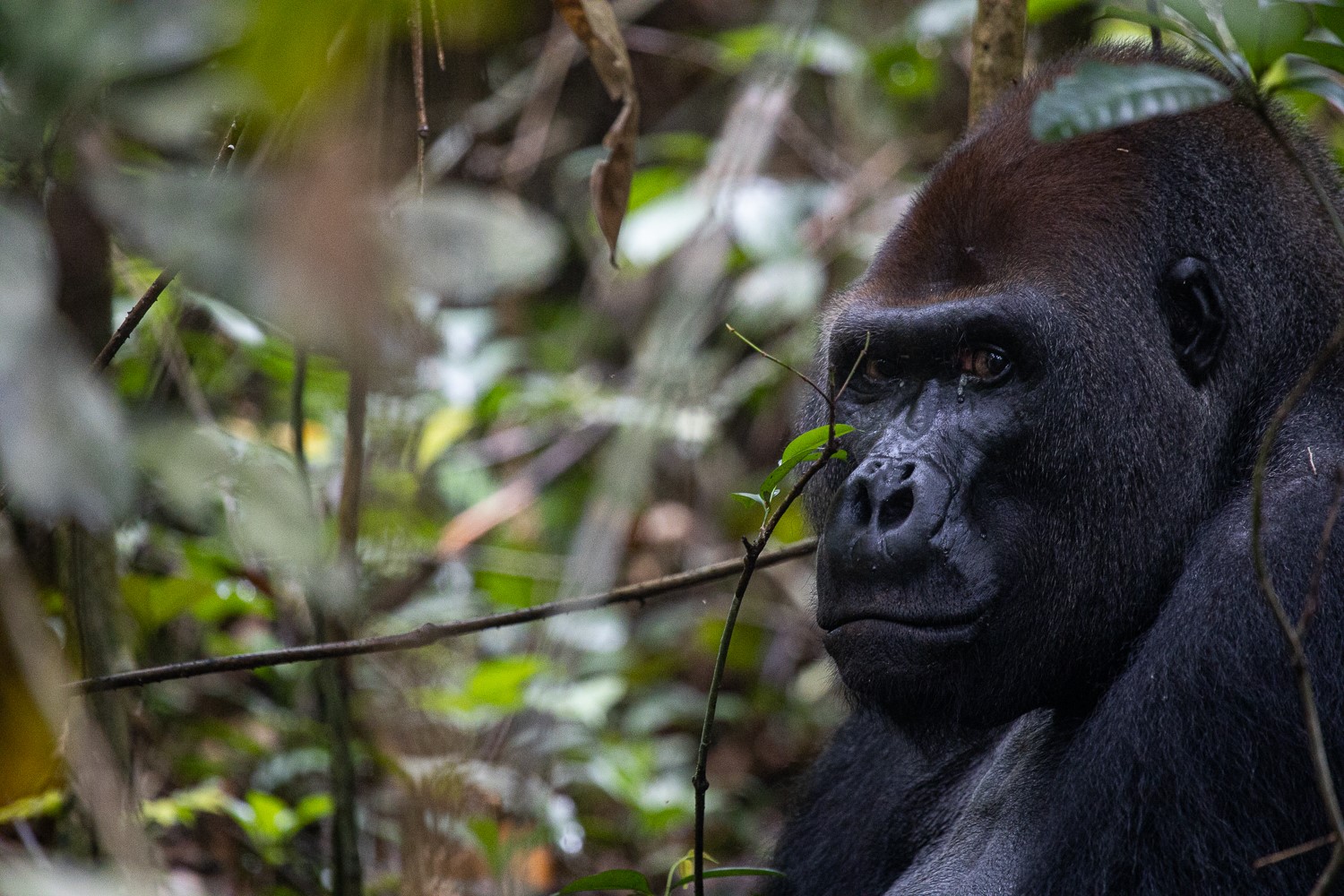
2025, the inventory started again. From February to October, DSPA will send out groups of six to conduct the survey at different sections of the forest. In the first visit, the group sets up the transect and the camera traps. Roughly a month later, the group returns for the second visit to assess the activity in that area through direct observations and camera footage.
6 teams, 48 people, 12 deployments, +26 000 camera trap footage, 386 Elephant DNA samples, 990 Edna Leaf Swabs, 14 963 observations data
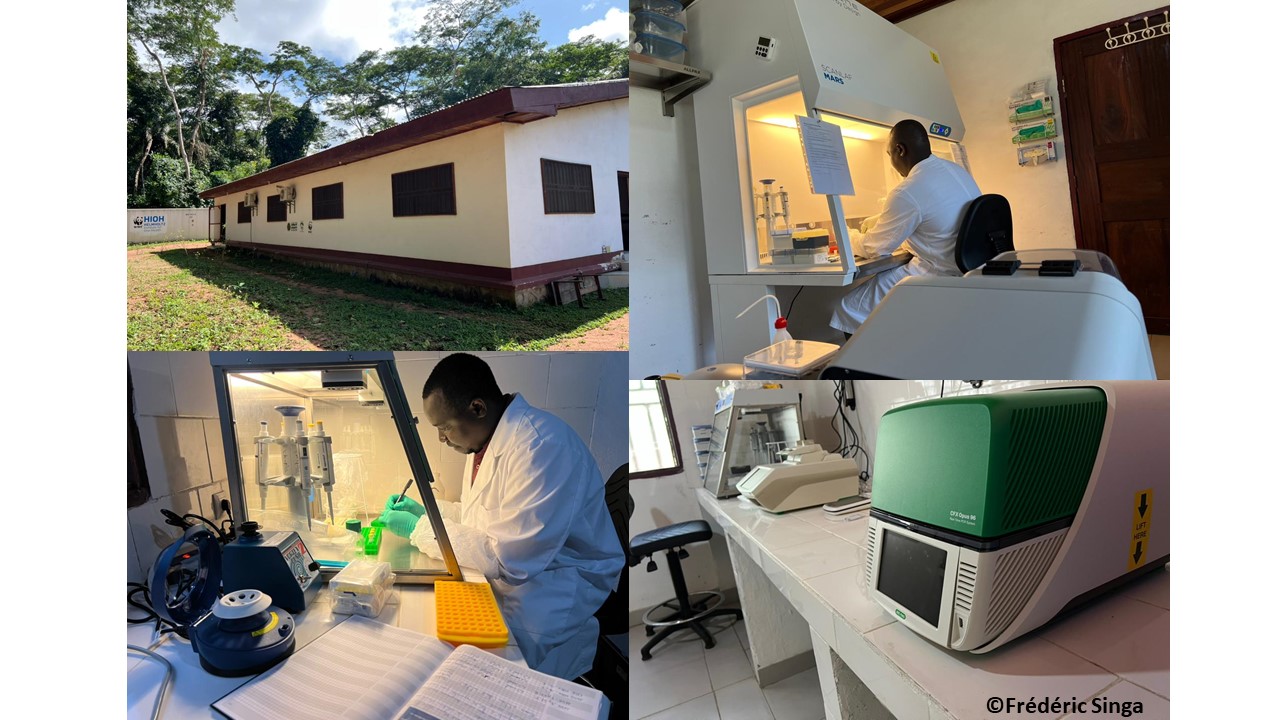
Beyond the line transect and camera traps, this year, DPSA is experimenting with a new method of surveying wildlife: eDNA Elephant DNA, or genetic materials—like skin cells and mucus—left behind by species in their surroundings.
“The process involves taking leaf swabs at several points along the transect. By collecting genetic material left behind on the foliage, we can detect the presence of various species that might otherwise remain hidden from sight or camera.”
“Adopting these new methodologies alongside traditional line transects allows us to maintain historical continuity while modernizing our approach. By cross-referencing data from transects, camera traps, and DNA analysis, we can evaluate the accuracy of each method and refine our future monitoring strategies”.
However, the DSPA team is also concerned with the location and density of these groups and what that can tell researchers about human activity in the area.
“We have observed a shift in elephant distribution, with a higher concentration found inside the protected areas. This suggests that increasing human activity in the community zones is pushing wildlife to seek refuge within the boundaries of the national park.”
For this inventory, Edé’s team is hoping that having four different methods to test against will help them to tell a more complete story about the wildlife of Dzanga-Sangha, including any risks or gaps in the conservation efforts. When the 2025 inventory concludes in October, Edé’s team will have the task of reviewing thousands of hours of camera footage, direct observations from the line transect, and eDNA samplings.
“Ultimately, inventories provides essential baseline that we need to understand current forest dynamics and strategically guide all our conservation actions across Dzanga-Sangha.”
At the end of an hours-long inventory day, the team stumbles out of the forest, having just spotted a lone baby bongo in the forest only a few feet from the line transect at its finished point. This bongo represents just one of countless wildlife that will be observed by the time the 2025 inventory is complete.
Legend: related to the cover picture from left to right:
Poussou Mongoumba Pépin Olivier: Team leader
Mombi Vianney Prestige: Assistant
Mapoumba Thierry: Observer
Nam Inga Prosper: Observer